 Plate Tectonics are show in a form of continental drift; continential drift is when we have evidence of plates shifting or moving towards or away from one and other, (divergent and convergent boundaries) which then makes continents shift and move or break off.  With this once super continent known to us as Pangaea, we have evidence that it was once here, and also why it has changed. Reasoning for thus, is that there have been evidence and findings of distinct creatures found in two completely different areas, which is expressing they could once have been joined together, and shared the same climate. Transform Boundaries: are when two plates move past each other when they're coming from different directions or when they're coming from the same direction but at different speeds. Earthquakes are common when takes place because they tend to grind against each other, such as st. adreas fault. 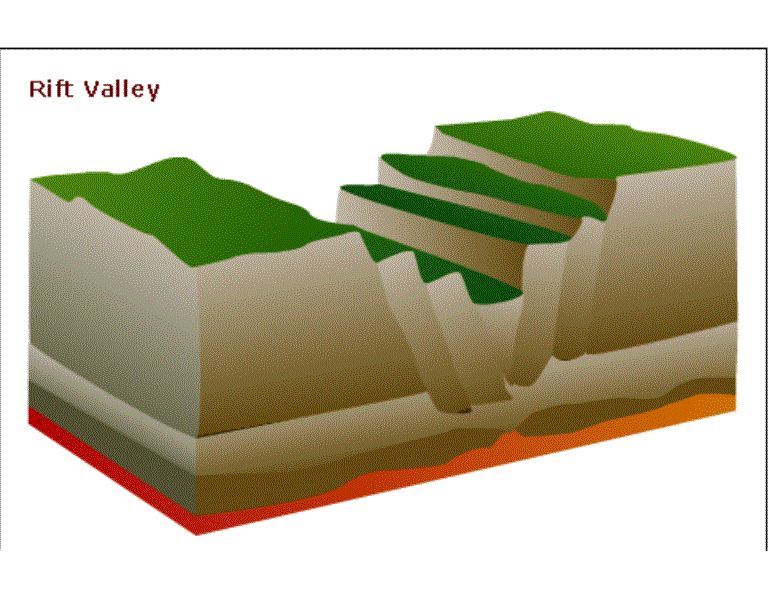 | on the 1960's many believe the theory that the earths upper mantle and crust were moving in, and away from the original location.
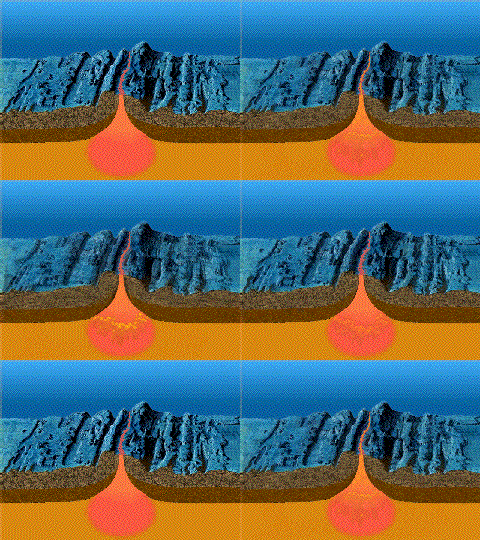 There are many further explained examples of plate tectonics, that going farther in depth then just a divergent or convergent boundary. Continental Collision is when two continents collide over land, like mout everest. Subduction zone is when one continental and one ocieanic plate collide together like the ring of fire, these are both types of convergent boundaries. Seafloor spreading is not only an example of plate tectonics, it's a kind of divergent boundary along with rift valleys. A divergent boundary is when two plates move away from one and other. During seafloor spreading, thus occurs, the only reason it is given it's own name is because when seafloor spreading takes place two plates move away from one and other under water. |
Plate Tectonics |

Make a Free Website with Yola.
