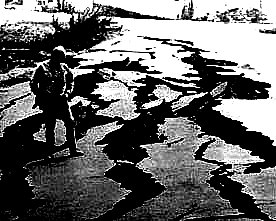
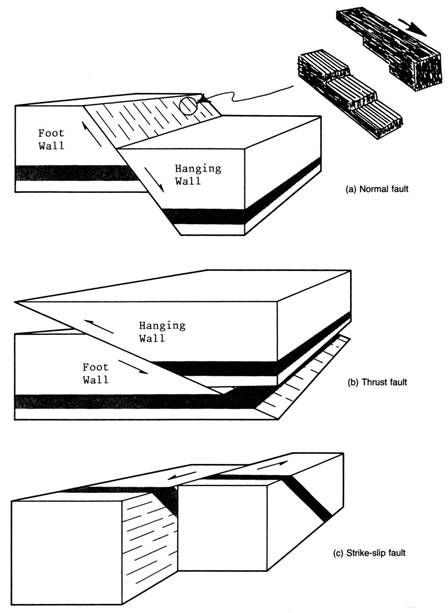
Although earthquakes are something we cannot ignore or overpower, they are a signifigant force, with what seems to have a mind of their own. Earthquakes are ther vibrations produced by the breaking of rocks. The fault is when rocks break they move along them. Certian specific complications determine the kind of damage made, such as different types of faults. They consist of Reverse Faults- which is rocks above the surface is forced up and over the rocks below the fault surface. A Normal Fault- Is rocks above the faults surface move downward in relation to rock below the fault surface. The last type is a Strike-Slip Fault- Rocks on either side of thte fault are moving past each other without much upward or downward movement. Below is the specified types of faults.
To measure an earthquake, there are two different scales used.
First is the Mercalli Intensity Scale which goes by the amount of damage an earthquake causes and goes up to fifteen different levels.
The Second is the Ritcher Scale: which is by the height of the lines in the seismograph, which measures earthquakes as they happen and the time.
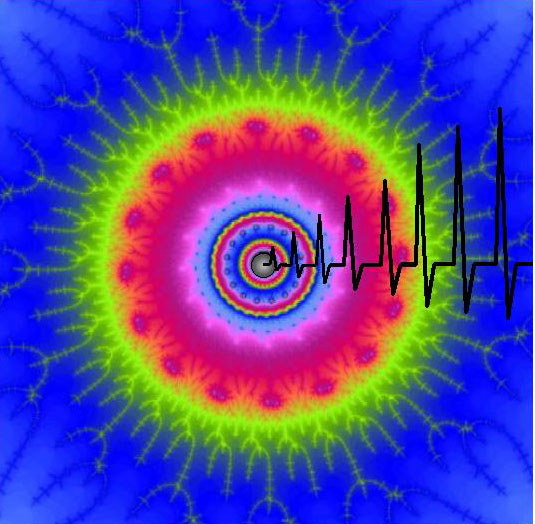
As shown is the photo above, the epicenter- is the point on the earths surface directly above the earthquakes focus. The focus- is the point in earths interior where energy is released. The epicenter is directly above the focus of an earthquake.
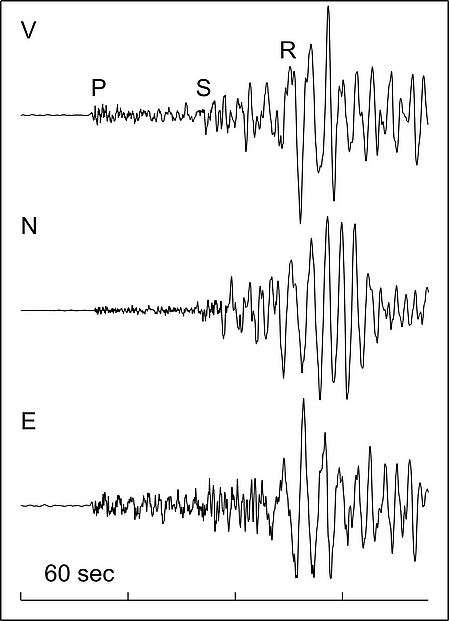
The first time of wave is a Primary Wave: Which moves rock particles back and forth in the direction of the wave.
Surface Wave: Moves rock particles up and down in a backward motion and up and down in more of a swaying way.
Secondary Wave: Moves rock particles at right angles in the direction of the wave.
